

How much complexity is really necessary in plastics recycling? As cost, energy, and quality pressures continue to rise, it’s worth rethinking established process steps. This article explores how advanced agglomeration solutions can help recyclers streamline operations, improve handling, and unlock higher performance across the value chain.
Executive Summary
As plastics recyclers face growing pressure to improve efficiency, reduce energy consumption, and deliver consistent material quality, intermediate processing steps are increasingly under scrutiny. Modern agglomeration technologies are redefining what is possible, by combining agglomeration, drying, and partial crystallization in a single, compact process step. Systems such as the Plastcompactor HV 70 from Herbold Meckesheim demonstrate how recyclers can simplify material handling, lower operating costs, and unlock higher throughput, without compromising polymer quality or operational reliability.
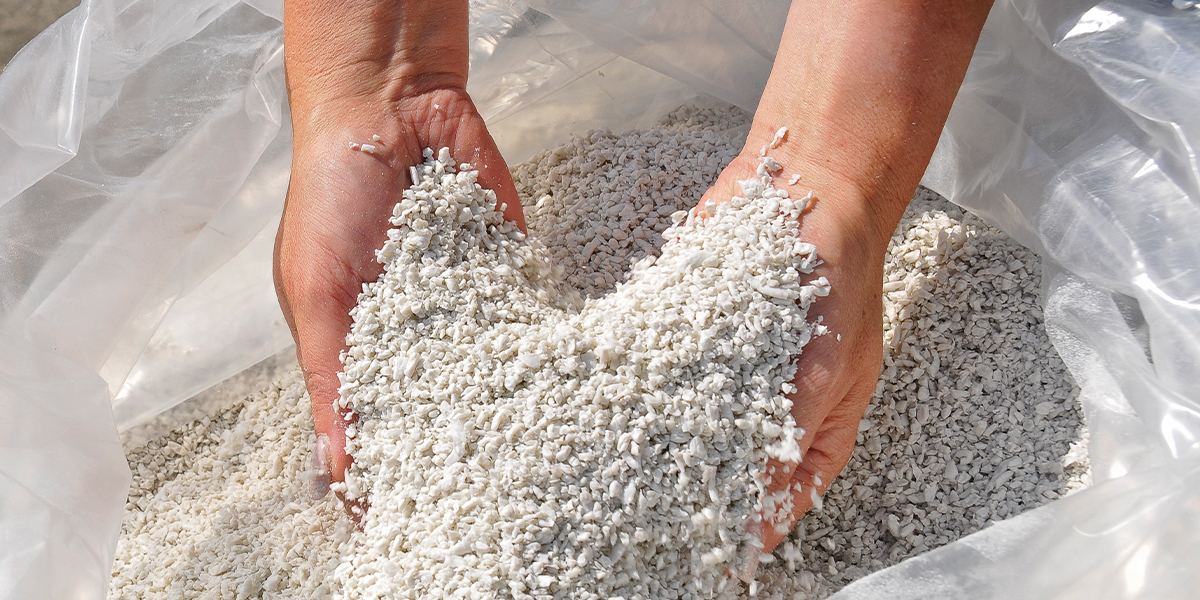
HV Plastcompactors process plastics to agglomerates with a high bulk density.
Photo: Herbold Meckesheim, Germany
The Challenge: Complexity in Reprocessing Recycled Plastics
In many recycling operations, complexity accumulates across the line. Flakes with low bulk density require special silos, unstable conveying solutions, additional drying stages, and careful handling, each step adding cost, energy consumption, and operational risk. This is particularly true for recycled PET and lightweight formats such as stretch films, foams, fines, and powders.
For decision‑makers, the implication is clear: every additional intermediate step increases CAPEX, OPEX, and process variability. In a market where margins are tight and quality expectations are rising, simplification is no longer optional, it is a competitive necessity.
Agglomeration as a Strategic Lever
Agglomeration systems have long been recognized for their ability to convert low‑bulk‑density regrind into free‑flowing material suitable for extrusion or injection molding. What has changed is how much value can be created within this single step.
Modern plastcompactors eliminate the need for classic downstream processes by combining:
- Agglomeration, producing agglomerates with high bulk density
- Drying, reducing residual moisture during processing
- Partial crystallization, especially relevant for recycled PET
The result is a material that flows reliably, conveys easily, and can be processed directly in extruders, preform injection molding machines, or film lines with gravimetric dosing, without special storage silos.
Inside the Plastcompactor HV 70
As the most powerful model in its class, the Plastcompactor HV 70 compresses material continuously between a rotating and a stationary disc fitted with replaceable kneading bars. A steplessly adjustable feeding screw meters material from the buffer silo directly into the working zone through the stator center, ensuring precise process control.
Two key design principles stand out:
- Minimal thermal stress
Material is heated rapidly but exits the compacting zone within fractions of a second, keeping thermal impact extremely low, a decisive factor for maintaining polymer quality, particularly in PET recycling. - Process flexibility via dual control parameters
Operators can fine‑tune performance using two independent variables: screw speed and disc gap. This allows stable processing across a wide range of input materials and bulk densities.
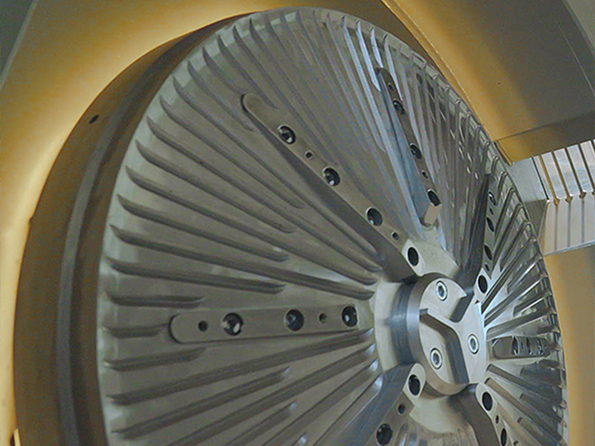
Compactor disc with adjustable gap for precise control of friction.
Photo: Herbold Meckesheim, Germany
One Machine, Many Applications
The HV Plastcompactor series is designed for versatility. It handles thermoplastics such as fibers, films, foams, tapes, fines, powders, shavings, and mixtures that are otherwise difficult to convey, store, or mix. In many of these cases, conventional mechanical or thermal drying would require a disproportionate amount of energy, making agglomeration the more sustainable choice.
When installed downstream of washing lines, plastcompactors play an additional role:
Moist material is heated in the compacting zone until moisture evaporates. With downstream granulation and classification, residual humidity levels below one percent can be achieved. The same system can also incorporate additives, such as pigments, lubricants, or plasticizers, directly during feeding, enabling compounding or PET recrystallization in a single integrated process.
Reliability, Automation, and Lower Operating Costs
From a strategic perspective, performance alone is not enough. The HV 70 combines high throughput with low maintenance costs and a fully automatic control system that stores parameter sets for different materials. Continuous monitoring of temperature and drive performance ensures process stability and minimizes personnel requirements.
Recent design enhancements, ranging from optimized disc geometry to improved automation and a more compact footprint, further reduce manual intervention during operation. At the same time, redesigned silos and feeding systems now handle extremely low‑bulk‑density materials with challenging flow characteristics, opening new application areas and improving overall operational resilience.
Why This Matters for Decision‑Makers
For senior leaders in plastics recycling, agglomeration is no longer just a technical detail. It is a strategic enabler, impacting energy consumption, line utilization, material quality, and workforce efficiency. By consolidating multiple process steps into one robust unit, recyclers can reduce complexity while increasing both throughput and predictability.
Three Practical Takeaways
- Simplify to scale
Reducing intermediate steps in recycling lines lowers costs, shortens payback times, and improves operational stability—especially when processing PET or lightweight materials. - Energy efficiency starts upstream
Agglomeration can replace energy‑intensive drying and handling steps, delivering immediate savings while improving bulk density and flow behavior. - Design for flexibility and reliability
Equipment that adapts to varying input materials, and minimizes manual intervention, protects performance over time and supports future material streams.
In an industry under constant pressure to do more with less, rethinking agglomeration is not just a technical optimization—it is a leadership decision.
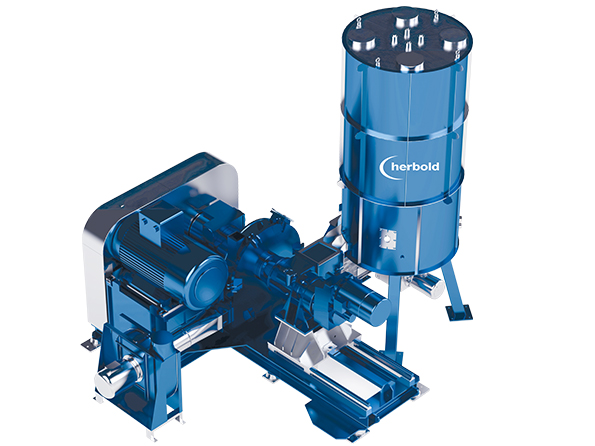
The HV 70 Plastcompactor from Herbold Meckesheim enables efficient agglomeration.
Photo: Herbold Meckesheim, Germany
Herbold Meckesheim GmbH
Industriestr. 33
D-74909 Meckesheim
Germany
Tel: +49/6226/932-0
herbold@herbold.com
www.herbold.com